
01 / AGENT OS
VROS Agent
Applications, typed events, persistent memory, permissions and sandboxed execution for multi-agent work.
Explore this capabilityAIBotStore connects role-based AI teams, expert employees, on-premises AI hardware and Forward Deployed Engineering on one VROS Agent foundation.

Agent OS × role applications × computing × field delivery
AIBotStore is an AI employee app store. VROS Agent is its multi-user agent operating system; AI hardware provides the runtime environment; FDE specialists adapt the complete system to real workflows, permissions and acceptance criteria.
Each layer has a clear responsibility, so enterprises can start with one task without creating another isolated AI tool.
Applications, typed events, persistent memory, permissions and sandboxed execution for multi-agent work.
Explore this capabilityConfigurable multi-role teams, expert employees and engineering applications aligned to actual responsibilities.
Explore this capabilityDesktop, office, edge and data-center form factors selected around models, concurrency and local data boundaries.
Explore this capabilityOn-site workflow discovery, system integration, verification, handover and continuous optimization.
Explore this capabilityChoose a role capability, then configure its knowledge, tools, permissions and evaluation criteria for your organization.
Configure management, marketing, sales, service, finance and operations roles with shared task context, enterprise knowledge and approval boundaries.
Bring authorized alerts, vulnerabilities and threat intelligence into triage assistance, ticket drafts and review records. High-risk actions remain human-confirmed.
Organize policies, documents and historical work through ingestion, hybrid retrieval and knowledge graphs, with answers and drafts grounded in citations.
Maintain long-running research tasks across papers, patents, standards and industry developments, from collection and deduplication to briefing drafts.
Select computing around the workload first, then integrate models, knowledge, tools and governance through VROS Agent.
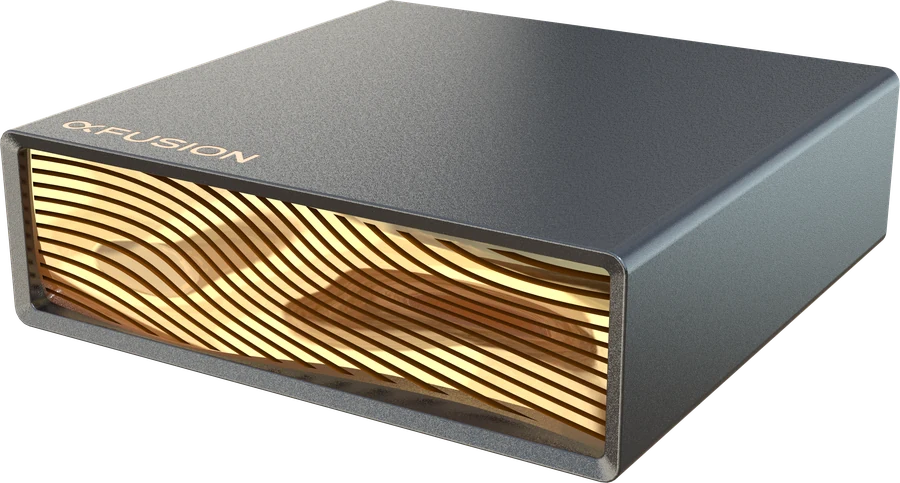
An xFusion desktop AI supercomputer for local development, inference, research and lightweight role validation.
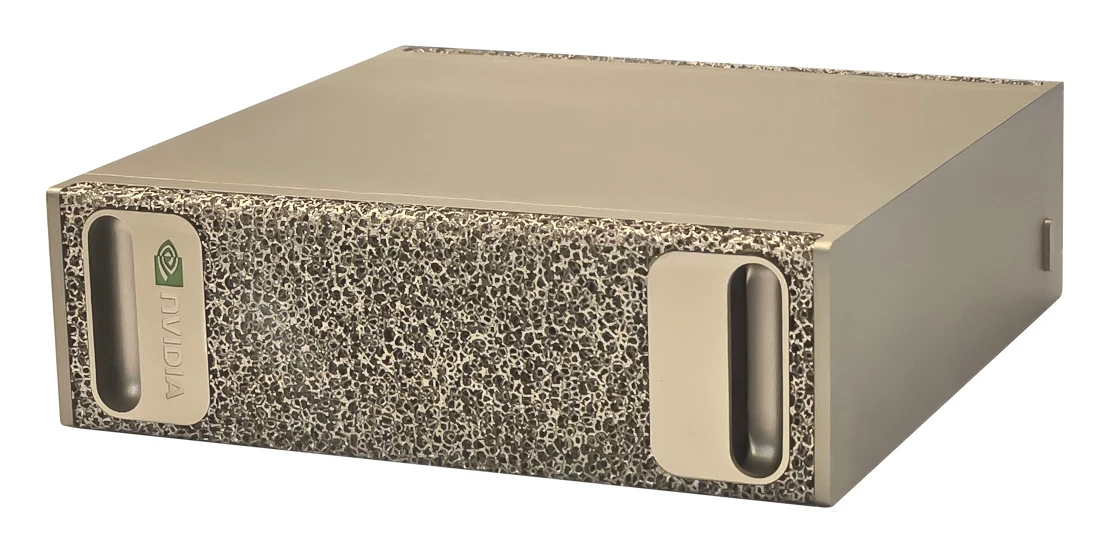
An NVIDIA GB10 Grace Blackwell desktop platform for agent development, model prototyping, fine-tuning and local inference validation.
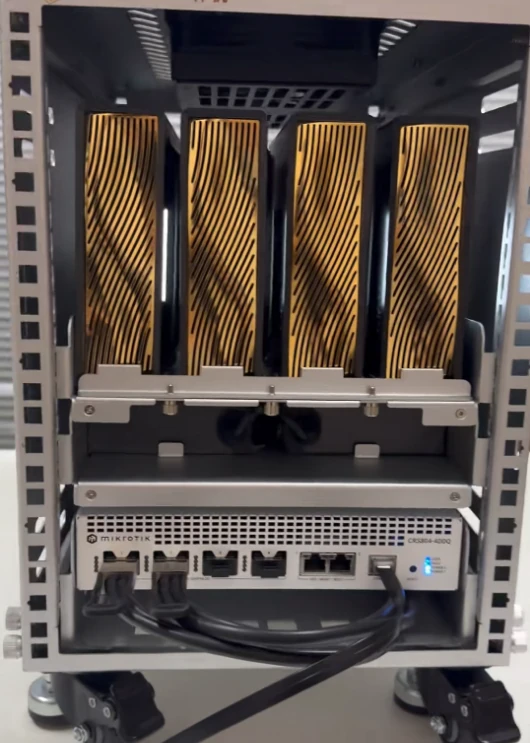
A four-node NVIDIA DGX Spark mode for parallel roles, task distribution and shared team validation. Network, model and application performance require project-specific testing.
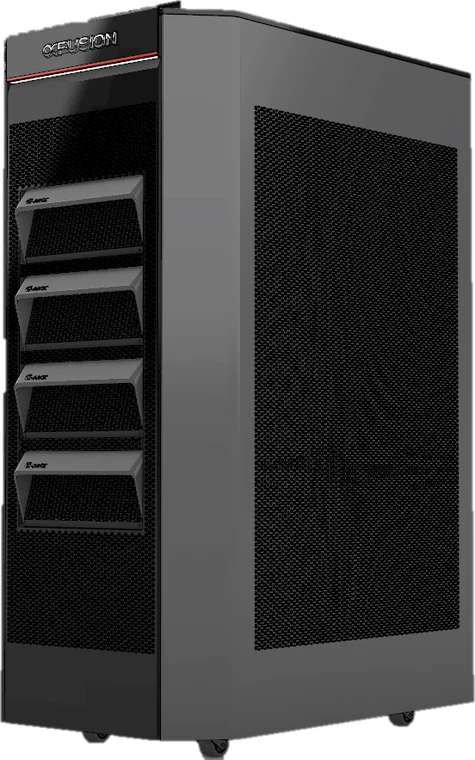
An office AI hub with liquid cooling, low-noise operation and elastic Pack expansion for team-level AI workloads.
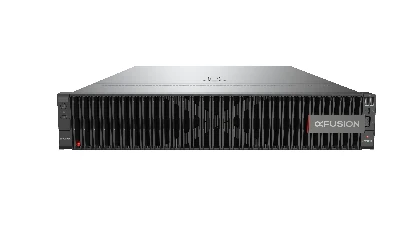
Integrated computing, model and platform capabilities for departments, mid-sized organizations and branch environments.
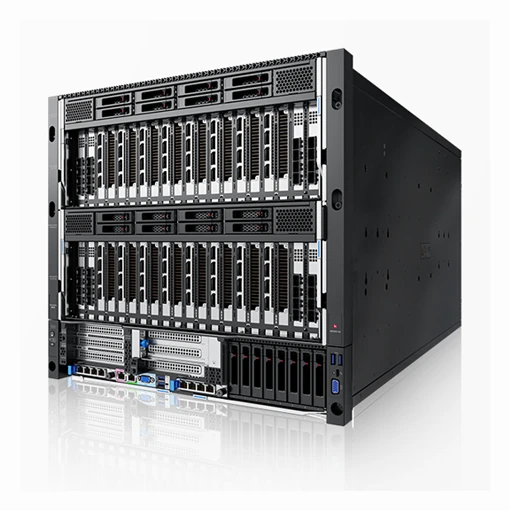
General-purpose servers, AI servers and rack-scale liquid-cooled forms for data centers and enterprise clusters.
Sources and specifications: FusionXpark images and public specifications come from the official xFusion product page; NVIDIA DGX Spark specifications come from NVIDIA’s official product page and its product image from M Computers; the four-node Spark photo is user-provided and illustrates a project hardware mode, not a standard NVIDIA rack product, default configuration or linear scaling claim; TokenBox reference metrics come from user-supplied xFusion materials. “Up to 1 PFLOP” refers to theoretical FP4 performance with sparsity, not actual application throughput. Integration and trademark notice: product names, images and trademarks belong to their respective owners and are shown only for integration planning. They do not imply vendor endorsement or an AIBotStore performance commitment. Compatibility, availability, final configuration and delivery scope depend on current vendor specifications and project-specific verification of model, memory, storage, inference environment, network and workload.
A usable AI workforce is built through real data and operating conditions, not a presentation environment.
Map business goals, data sources and frequent work to find a clear, verifiable first step.
Define responsibilities, workflow nodes, tool permissions and human review points.
Configure models, knowledge bases, Skills and MCP tools into an executable task chain.
Test quality, safety and software-hardware compatibility with actual data and operating conditions.
Return results and feedback to organizational knowledge, then add roles, responsibilities and compute gradually.
Decision and execution are separated, permissions are explicit, critical actions can require approval, and typed events support review.
Side-effect actions are dispatched to Worker sandboxes under configured permissions.
Personal, public and collaborative spaces share a consistent resource authorization model.
Dangerous tools and critical business actions can pause for confirmation, correction or interruption.
Decisions, tool calls, approvals and Worker execution form typed, traceable events.
Clear answers about deployment, applications, hardware figures, controlled evolution and project delivery.
VROS Agent is the multi-user agent operating system for applications, events, memory, permissions and Worker execution. AIBotStore is the AI employee app store built on it, turning those capabilities into configurable role-based teams, expert employees and engineering applications.
On-premises software-hardware deployment can be evaluated per project. VROS Agent can be adapted to desktop, four-node Spark, office, edge and data-center computing forms. Model size, concurrency, network isolation and the existing IT environment must be verified before a final configuration is proposed.
No. Each application is a configurable role capability, not a context-free software download. Knowledge, tools, permissions, compute and acceptance criteria are confirmed during implementation so the employee fits real work.
No. The controlled evolution design separates execution review, experience extraction, sandbox validation, human approval, asset versioning and controlled release. It is an evolution capability enabled according to the delivered version and project verification, not unrestricted self-modification.
No. Hardware figures are public specifications or reference test conventions from xFusion, NVIDIA and supplied materials. The 1 PFLOP figures are theoretical FP4 values with sparsity. Model choice, context length, concurrency and project configuration affect actual results. Final compatibility and performance depend on current original-vendor specifications and project verification.
Start with one frequent task with a clear boundary. Use the WeCom contact card to discuss the role, data boundary, tools and computing environment. A typical path then moves through discovery, prototype, integration, verification and handover.