
PERSONAL / EDGE
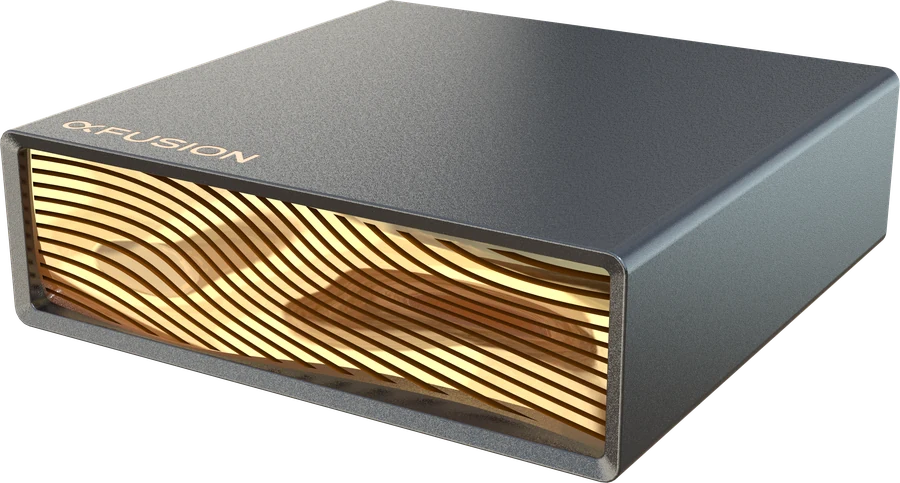
FusionXpark
An xFusion desktop AI supercomputer for local development, inference, research and lightweight role validation.
128 GBUnified system memory
Up to 1 PFLOPTheoretical FP4 with sparsity
Deploy local-first and scale progressively. VROS Agent and Workers can run together or separately, with project-specific adaptation across FusionXpark, NVIDIA DGX Spark, a four-node Spark mode, TokenBox, FusionOne AI, FusionServer and other desktop, team, office, edge and data-center computing forms.
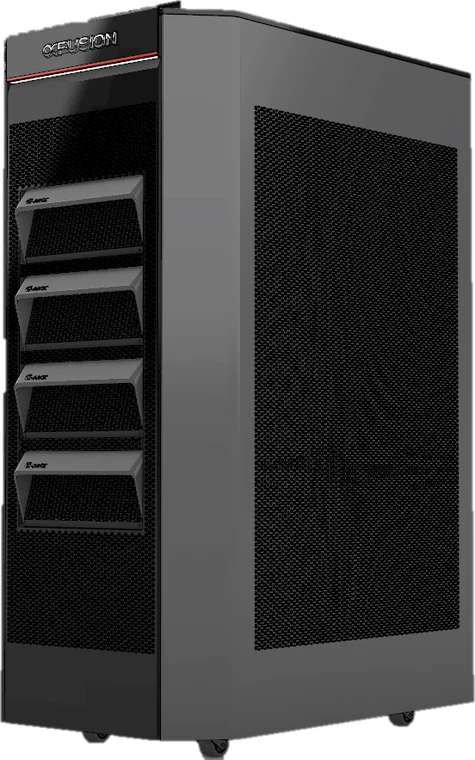 TOKENBOX / LOCAL AI INFRASTRUCTURE
AIBotStore connects AI employees with project-specific AI hardware integration. Hardware supplies computing; the inference platform supplies model services; VROS Agent organizes those resources into governed role-based production through adapters, events, permissions and Worker sandboxes.
Select around tasks, model scale, concurrency and operating conditions rather than device specifications alone.
An xFusion desktop AI supercomputer for local development, inference, research and lightweight role validation.
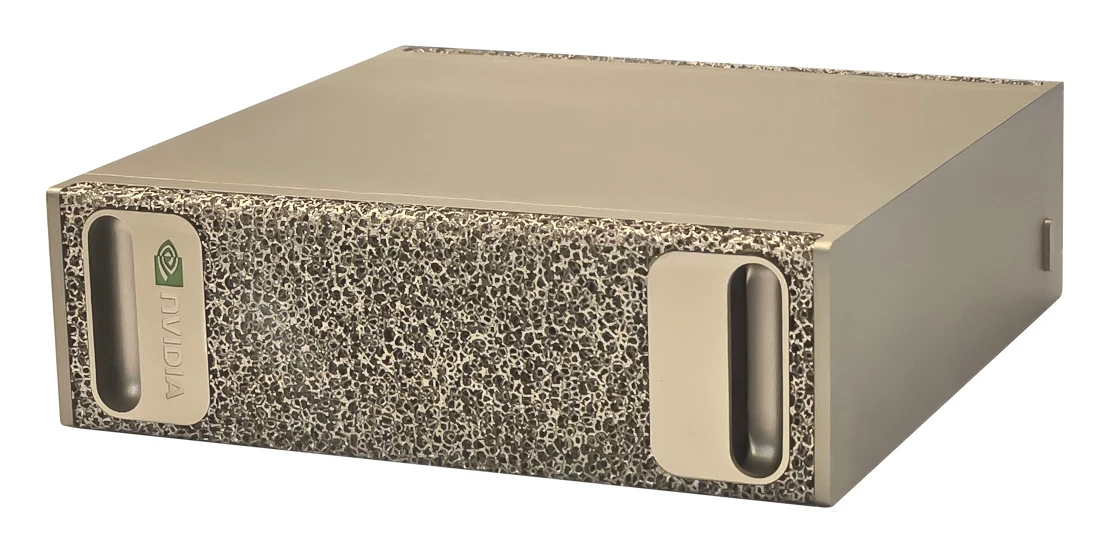
An NVIDIA GB10 Grace Blackwell desktop platform for agent development, model prototyping, fine-tuning and local inference validation.
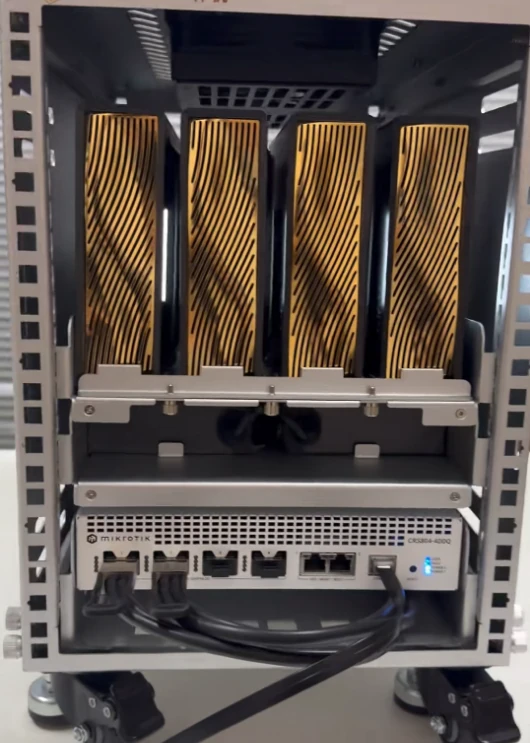
A four-node NVIDIA DGX Spark mode for parallel roles, task distribution and shared team validation. Network, model and application performance require project-specific testing.
An office AI hub with liquid cooling, low-noise operation and elastic Pack expansion for team-level AI workloads.
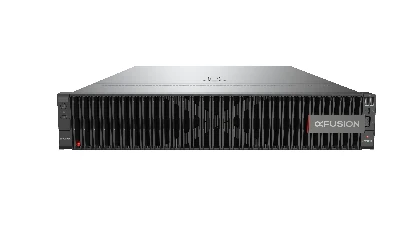
Integrated computing, model and platform capabilities for departments, mid-sized organizations and branch environments.
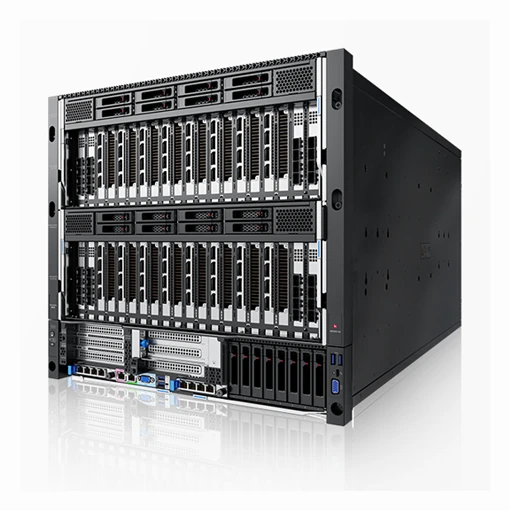
General-purpose servers, AI servers and rack-scale liquid-cooled forms for data centers and enterprise clusters.
Sources and specifications: FusionXpark images and public specifications come from the official xFusion product page; NVIDIA DGX Spark specifications come from NVIDIA’s official product page and its product image from M Computers; the four-node Spark photo is user-provided and illustrates a project hardware mode, not a standard NVIDIA rack product, default configuration or linear scaling claim; TokenBox reference metrics come from user-supplied xFusion materials. “Up to 1 PFLOP” refers to theoretical FP4 performance with sparsity, not actual application throughput. Integration and trademark notice: product names, images and trademarks belong to their respective owners and are shown only for integration planning. They do not imply vendor endorsement or an AIBotStore performance commitment. Compatibility, availability, final configuration and delivery scope depend on current vendor specifications and project-specific verification of model, memory, storage, inference environment, network and workload.
Three material-based configurations illustrate different model scale and workload directions. They are not universal performance guarantees.
For lightweight models, real-time interaction and a practical first group of AI employees.
Balances model capability, business workload and cost for larger models and enterprise concurrency.
For complex professional tasks and high-throughput enterprise AI hub planning.
The following figures are reference specifications and test conventions from xFusion materials. Model, context length, concurrency and project configuration affect actual results. They do not constitute a performance commitment by AIBotStore.
VROS Agent connects replaceable resources and adds task state, permissions and safe execution around them.
Multi-role teams, expert employees and engineering applications.
VR Lang, events, memory, three spaces, permissions and audit.
Model adapters, knowledge retrieval, Worker sandboxes and remote nodes.
FusionXpark, NVIDIA DGX Spark, four-node Spark, TokenBox, FusionOne AI and FusionServer integration options.
The same VROS Agent system connects selection, compatibility, role configuration and operational handover.
Map data boundaries, network conditions, models and concurrent tasks.
Match desktop, multi-node team, office, branch or data-center form factors to the workload.
Validate VROS Agent, the inference environment and hardware compatibility.
Configure models, knowledge, tool permissions and AI employees.
Test real tasks, train operators and complete operational handover.
Understand desktop computing, hybrid deployment, compatibility testing and public specifications before selecting for real workloads.
Define the workload before selecting a device. Evaluate the model and quantization method, context length, retrieval, concurrency, latency, data boundary, network isolation, existing IT, power, cooling and operations—not only parameter counts or peak compute. Test the target model and real tasks for compatibility and load, then choose a desktop, office, departmental or data-center form and decide how it may need to scale.
FusionXpark and NVIDIA DGX Spark are GB10 Grace Blackwell desktop AI forms suited to agent development, model prototyping, research and local inference validation. Public specifications list 128 GB unified system memory for FusionXpark and 64 GB or 128 GB per-node unified memory options for DGX Spark. The four-node Spark mode combines four DGX Spark systems for parallel roles, task distribution and shared team validation. It does not present node memory as one unified pool or assume linear performance scaling. Compare exact configurations, networking, software environments and real-task verification before selection.
Local deployment supports designs around data boundaries, private networks and steady dedicated workloads; cloud computing suits elastic capacity, short experiments or approved cloud services. They are not mutually exclusive. A hybrid design can place inference, retrieval and tools according to data classification and task risk, but must define external-call content, network paths, permissions, logs and cost. Compliance requirements and measured results determine the final architecture.
Being able to load a model of a given parameter count does not mean it can sustain a business workload. Usable unified memory or VRAM, bandwidth, quantization, context length, concurrency, inference runtime, model architecture, storage and networking all affect results. Retrieval and Worker tools also consume resources. Selection records should include model version, precision, input-output lengths and concurrency, with real-task results as the acceptance evidence.
It can be evaluated per project, but not every existing device should be assumed compatible. Review processors and accelerators, memory, storage, operating system, drivers, inference runtime, containers, network and security policy. Ports and adapters can then connect models, tools and Worker resources. If capacity is insufficient, co-located services, remote Workers or additional compute nodes can support progressive expansion, subject to compatibility testing and the agreed design.
It is a theoretical peak using FP4 precision with sparsity—not actual application throughput, tokens per second, concurrency or a direct promise about supported model size. Model, precision, sparsity conditions, context and software stack all change measured results. The website uses the figure to identify public vendor specifications; capacity and performance for an AI employee project must still be verified with the target configuration and real tasks.
No. These products illustrate VROS Agent integration options. Product names, images and trademarks belong to their respective owners, and public specifications come from vendor pages or identified materials. No vendor endorsement of AIBotStore is implied, and AIBotStore does not turn reference metrics into its own performance commitment. Availability, final configuration, compatibility and delivery scope depend on current vendor information and project-specific confirmation.